I want to be honest with you before we get into the data.
A few months ago, I opened Google Search Console on a Monday morning — something I’d done a hundred times before — and the graph looked wrong. Not “down a little” wrong. Off a cliff wrong. Traffic had dropped nearly 40% in six weeks, and my rankings hadn’t moved at all.
I wasn’t alone. All over blogging forums and SEO communities, people were posting the same screenshot. Same story. Same confusion.
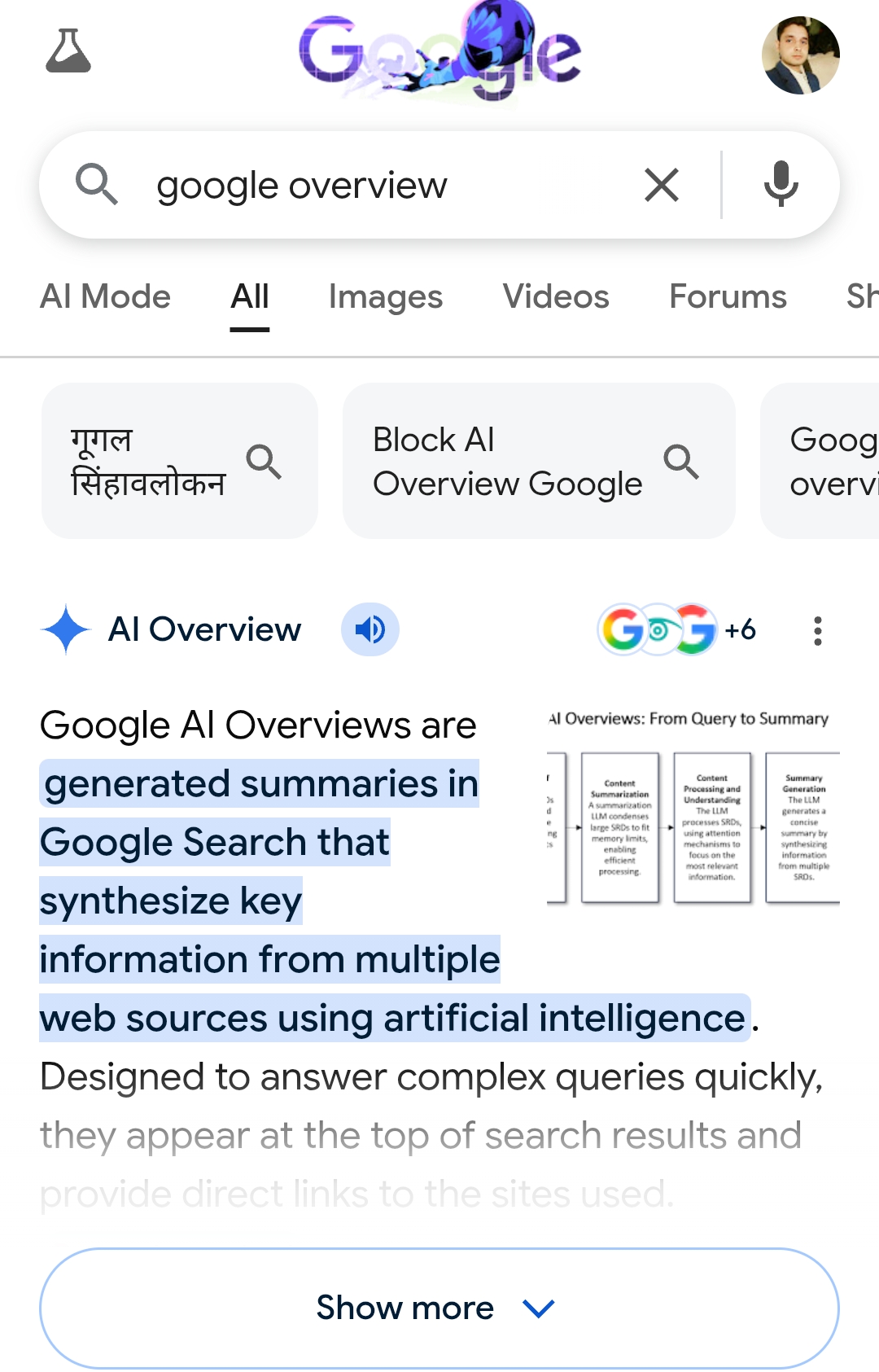
The culprit? Google’s AI Overviews.
If you have a blog and you haven’t felt this yet — you will. And if you’re already feeling it, I want to give you something more useful than panic: the real numbers, a clear explanation of what’s happening, and a practical plan that’s actually working for bloggers right now in 2026.
In this post:
What Google Actually Did (And Why It’s Different This Time)
Google has always updated its algorithm. Every few months, some sites go up, some go down, everyone adjusts, and life goes on. This is different.
AI Overviews aren’t a ranking update. They’re a fundamental change to what Google’s search results page is for.
Here’s how it used to work: You search for something. Google shows you ten links. You click one. That blogger gets a visitor, shows you an ad, and everyone gets paid. Simple. That contract between Google and publishers held together the entire web economy for twenty years.
AI Overviews break that contract. Now when you search for most informational questions, Google reads every top-ranking blog post, summarizes the answer, puts it at the very top of the page in a big box — and most people never scroll down to click anything.
They got what they needed. Google kept them on the page. You got nothing.
And then Google added something called AI Mode — an even more aggressive version that answers complex, multi-step questions entirely within Google’s interface. As of early 2026, AI Mode has over 100 million monthly active users, and 93% of AI Mode sessions end without anyone clicking an external link. Not 30%. Not 50%. Ninety-three percent.
The Numbers Are Brutal — Let’s Look at Them
I know some of you are thinking: “Maybe it’s not that bad. Maybe my niche is fine.” So let’s just put the numbers on the table and not look away.
| What Happened | The Number | Source |
|---|---|---|
| Google search traffic drop for US publishers (2024–2025) | 38% | Chartbeat / Reuters Institute |
| CTR drop when AI Overview is present | Up to 89% | DMG Media |
| Users who clicked when AI Overview was shown | Only 8% | Pew Research (68,000 real queries) |
| US Google searches that now show AI Overviews | ~50% | Heroic Rankings |
| AI Mode sessions ending without any click | 93% | Blog Herald (2026) |
| Expected further decline in search referrals (next 3 years) | 43% | Reuters Institute (media executives) |
Let that sink in for a second. You could be ranking #1 on Google right now, and still get almost no traffic from it — because the AI box above your result already answered the question.
This isn’t theory. One major SEO company shared their own data: their most-viewed blog post had 405,000 impressions on Google — and a click-through rate of 0.14%. The impressions were there. The traffic wasn’t.
“The old model of write a blog post, rank for a keyword, get traffic — is broken for most informational queries.”
Which Blogs Are Getting Destroyed (And Which Ones Aren’t)
Here’s the part that surprised me when I started digging into this.
Not every blog is suffering equally. Some blogs have seen traffic hold steady or even grow. The difference between them and the sites that are collapsing tells you everything you need to know about how to survive this.
🔴 Blogs that are getting wrecked:
- “Best of” and listicle blogs — “Best AI tools for X,” “Top 10 ways to Y.” These queries now trigger AI Overviews almost universally. Your carefully researched list gets summarized into a box, and you get no credit.
- How-to content built around simple questions — “How do I do X?” If a paragraph can answer it, Google’s AI will write that paragraph itself.
- Pure SEO traffic blogs — Sites where 80–90% of visitors come from Google search and almost none from email, social, or direct. These are the most exposed.
- Thin content that just answers what Google already knows — If your value add was “compiling information that already exists,” AI can do that faster and for free.
🟢 Blogs that are holding up or growing:
- Blogs with a real, recognizable voice — Personal experience, strong opinions, original perspective. AI can summarize facts. It can’t summarize you.
- Niche expert blogs — The person who has spent ten years in a specific industry writing about it in a way nobody else can. That content builds trust AI can’t replicate.
- Blogs with loyal email lists — If a significant chunk of your readers come directly or through email, Google’s changes barely touch you.
- Content with original research and unique data — AI Overviews actually cite sources that contain novel information. If you run original surveys, share unique case studies, or publish proprietary data — Google wants to reference you, not replace you.
💡 The honest truth: AI Overviews didn’t randomly destroy blogs. They revealed which blogs were built for search engines — and which ones were built for actual human readers. The good news is you can change which category you’re in.
What Is “Google Zero” — And Should You Be Scared?
You may have started hearing the phrase “Google Zero” in SEO circles. It sounds dramatic, but it’s a real concept worth understanding.
Google Zero refers to the point at which Google sends publishers essentially zero referral traffic — because users never leave Google’s ecosystem. They search, Google answers, they’re satisfied, they move on.
Publishers like the Daily Mail, Wired, and the Wall Street Journal have reportedly started contingency planning for this scenario. Business Insider’s monthly search traffic dropped 55% between 2022 and 2025. That’s not a dip. That’s a structural shift.
Should you panic? Not exactly. But should you take it seriously and change how you think about your blog? Absolutely yes.
The bloggers who will still be thriving in 2028 are the ones who stop treating Google as a guaranteed traffic source and start treating it as one channel among many.
8 Things You Can Do Right Now to Fight Back
Let’s get practical. Here’s what’s actually working in 2026 — not theory, not wishful thinking.
1. Build Your Email List Like Your Blog Depends on It (Because It Does)
This is not optional anymore. An email subscriber is someone Google cannot take from you. They chose to hear from you directly. Even a list of 2,000 engaged subscribers is more valuable than 20,000 monthly visitors from search who don’t know your name. Add sign-up forms everywhere. Give people a real reason to subscribe.
2. Write Content Only You Can Write
What’s your actual experience? Your real opinion? Your story? Write that. “I tried every AI writing tool for 30 days and here’s what I actually found” beats “Best AI writing tools 2026” every single time now — because the first one has a perspective AI cannot replicate.
3. Get Cited IN the AI Overview, Not Buried Under It
This is the big mindset flip. The goal isn’t to avoid AI Overviews — it’s to be the source they cite. Brands that appear as citations inside AI Overviews earn 35% more organic clicks than those that don’t appear at all. How do you become a cited source? Use clear headers, answer questions directly at the top of sections, add FAQ schema markup, and include original data or quotes that the AI can reference.
4. Build on Multiple Traffic Channels
Reddit, YouTube, LinkedIn, Pinterest, Quora — these platforms are now showing up directly inside Google search results. Building presence on them works on two levels: you get their direct traffic, and you get Google visibility through them. Don’t build on one platform. Build on several.
5. Go After Long-Tail, Specific Queries
AI Overviews appear most on short, common informational queries. The longer and more specific the search — the less likely there’s an AI box eating your traffic. Queries of 8+ words are far less likely to trigger an AI Overview. Write content for those specific, detailed questions that Google’s AI can’t yet handle well.
6. Add Original Research and Data to Your Posts
Run a quick survey. Pull unique data from your own experience. Share original case studies. Content that contains genuinely new information — stats that don’t exist anywhere else — is exactly what AI Overviews want to cite. You become a primary source instead of a secondary one.
7. Add Schema Markup (Especially FAQ Schema)
Structured data helps Google understand what your content is about and extract it accurately. FAQ schema at the bottom of your posts can get you into featured snippets and AI-cited sources. It takes 20 minutes to add and can make a real difference. Most SEO plugins (Yoast, RankMath) make this easy.
8. Build Your Brand, Not Just Your Rankings
The bloggers who survive algorithm changes are the ones people search for by name. When someone searches “aiworko.com AI tools” instead of just “AI tools” — Google can’t replace you, because they’re looking for you specifically. Brand authority is the ultimate protection against any future Google update.
📋 Quick Action Checklist
- ☐ Add an email sign-up form to your homepage and every post
- ☐ Audit your top 10 posts — could AI summarize them in a box? Rewrite if yes.
- ☐ Add FAQ schema to your 5 most important posts this week
- ☐ Start or grow one non-Google traffic channel (email, YouTube, Reddit, Pinterest)
- ☐ Write one piece of content this month that includes original data or personal experience
- ☐ Check Google Search Console — if impressions are up but clicks are down, AI Overviews are the cause
The Mindset Shift Every Blogger Needs in 2026
I want to end with something that took me a while to accept.
The version of blogging where you find a keyword, write a post that answers it, rank on Google, and collect passive traffic — that model is not completely dead, but it is seriously broken for most content types. Mourning it is understandable. Staying stuck in it is dangerous.
The bloggers I’ve watched navigate this well all share one thing: they stopped thinking of themselves as “SEO content creators” and started thinking of themselves as trusted voices in a specific community. Their content isn’t designed to intercept a search query. It’s designed to be worth reading, worth sharing, and worth coming back for.
That doesn’t mean abandoning SEO. It means layering real value and real personality on top of it.
Google’s AI can summarize any article on the internet. It cannot replace someone who genuinely knows their subject, has real experience to share, and has built an audience that actually cares what they think.
Be that person. Build that blog. That’s the version of this game that Google can’t kill — no matter what they update next.
📬 Get Weekly AI & Blogging Tips from aiworko.com
Every week I share practical strategies for bloggers navigating the AI era — what’s working, what’s not, and what to do next. No fluff. Join the newsletter.